

















Craps can look like a blur of flying dice, loud calls, and stacks of chips, but the betting side is easier to understand than it first appears. Every roll belongs to a cycle, and every wager on the layout comes with its own long-term cost. A player who learns that cost before putting money down has a much better chance of enjoying the game without donating to the casino's advantage.
Start With the Come-Out Roll
The first throw is called the come-out roll, and it sets the direction for the hand. If the shooter rolls a 7 or 11, pass line bettors win right away. If the roll is 2, 3, or 12, those same bets lose immediately. When 4, 5, 6, 8, 9, or 10 appears, that number becomes the point. From there, the shooter keeps rolling until either the point is repeated, which pays pass line bets, or a 7 appears, which ends the hand and takes those bets down. Understanding this sequence is essential because many of the game's best and worst bets depend on whether a point is on or off.
Why the Pass Line Deserves Attention
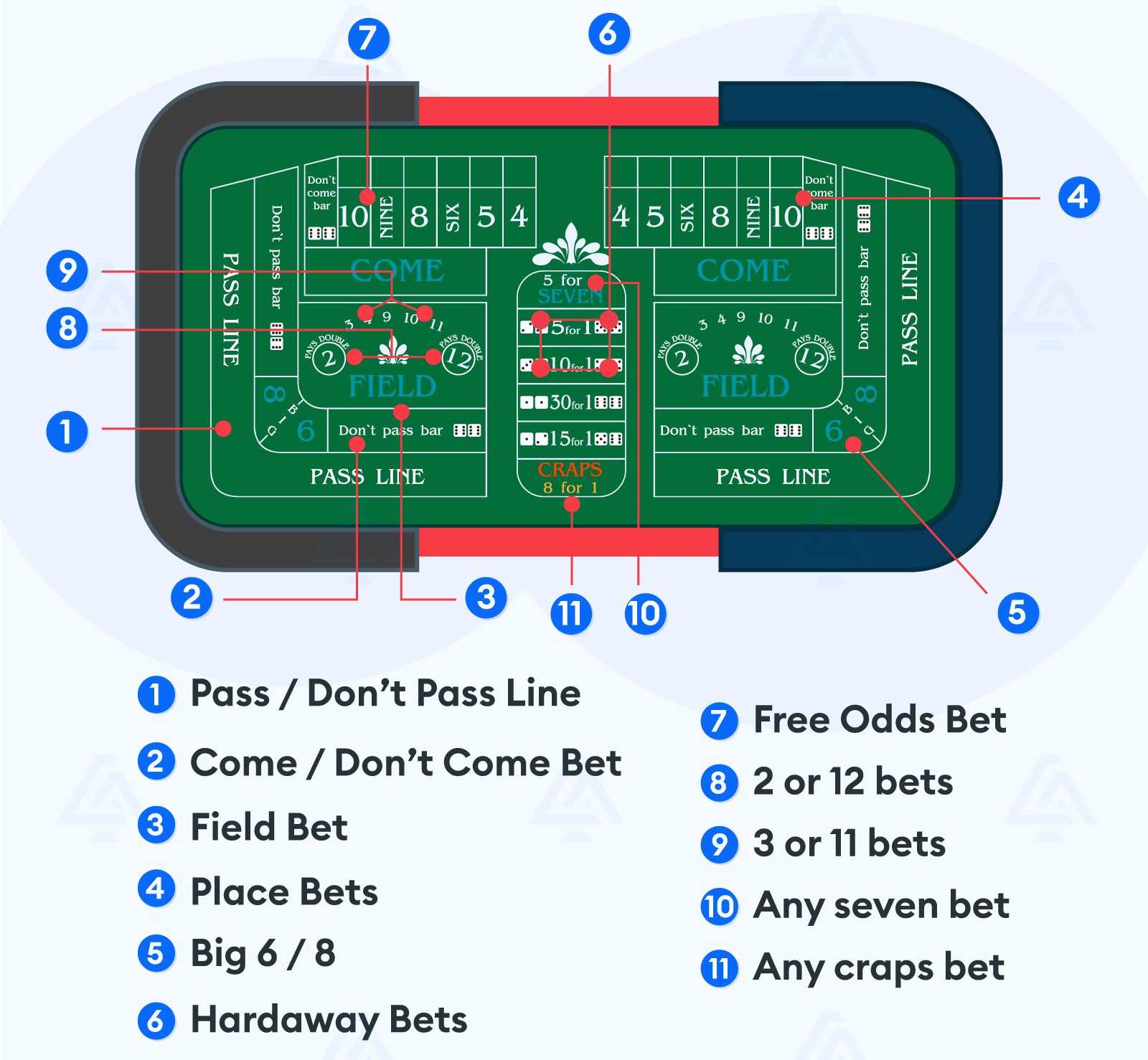
For most casual players, the pass line is the natural starting point. It is simple, social, and tracks the main flow of the game. It also carries a house edge of 1.41 percent, which is far lower than most other wagers on a craps layout. That does not mean it wins constantly, and it does not remove the casino's advantage, but it gives the player a fairer shot than many alternatives. The pass line is not a magic formula; it is simply one of the least expensive ways to join a hand. Players who want a clear, uncomplicated approach can treat it as the foundation of their betting plan rather than scattering chips across every possible outcome.
Odds Bets: The Best Value on the Layout
Once a point is established, many tables allow the player to add an odds bet behind the pass line. This wager is often described as the strongest option in craps because it is paid at true odds instead of carrying the usual built-in casino margin. The exact amount a player may add varies from one casino to another, so it pays to check the table rules or ask the dealer before assuming a multiple. The odds bet does not change whether the pass line wins or loses; it simply increases the payout when the point is made. For a disciplined player, that makes it a useful add-on, provided the extra exposure fits comfortably within the session budget.
Bets That Look Tempting but Cost More
The craps layout is full of wagers that seem exciting but punish players over time. The Big Six and Big Eight carry a house edge of 9.1 percent, which is steep for bets that feel similar to safer options. Hard 4 and Hard 10 are even more expensive at 11 percent, and proposition bets sit at 13.9 percent. These wagers can produce quick wins, and some experienced players use them for variety, but the long-run math is not friendly. A player who keeps throwing chips at high-edge bets is effectively paying more for the same entertainment. It is fine to enjoy the thrill of a long shot now and then, but those bets should be an occasional extra, not the core of a betting strategy.
Size Your Bets to Your Bankroll and the Table
Knowing which bets are better is only half the job. The other half is choosing amounts that allow the player to stay in the game without anxiety. A sensible plan starts with a session budget that is separate from essential money, followed by a bet size that leaves room for normal swings. The table minimum matters because it sets the lowest possible wager, and the available odds multiple affects how much a player can add behind the pass line. Players should never feel pressured to match another bettor's action or to increase a bet simply because a shooter is on a hot streak. Craps is still a game of chance, and no betting pattern can make a random roll predictable. Keeping bets steady makes the experience more manageable and prevents small losses from turning into a chase.
Keep Decisions Simple and Consistent
Craps offers plenty of variety, but proper betting does not require playing every option on the felt. The most practical approach is usually to stick with the pass line, add odds when the rules and budget allow, and leave the high-edge wagers mostly alone. Players can still cheer for the shooter, enjoy the table banter, and take part in the excitement without overcomplicating their money. A clear plan also makes it easier to walk away at a set point instead of trying to recover a bad round. The goal is to stretch entertainment value, not to outsmart the dice.
In the end, proper craps betting comes down to discipline and cost awareness. The come-out roll creates the game's rhythm, the pass line offers a low-edge way to participate, and the odds bet can improve the payout when used sensibly. The Big Six, Big Eight, hardways, and proposition bets may look appealing, but their higher house edges make them poor choices for most players. Keep bets within a planned budget, learn the table rules, and treat the game as entertainment rather than a reliable source of income.


6 Comments
Finally a review that explains everything clearly. Very helpful.
I withdrew twice this month and the money arrived very fast. Very happy.
Excellent article. The comparison table saved me a lot of time.
I read this twice. Everything I needed was here.
This is the third article I read here and all of them were very good.
Thank you for explaining free spins. Now I understand it.